


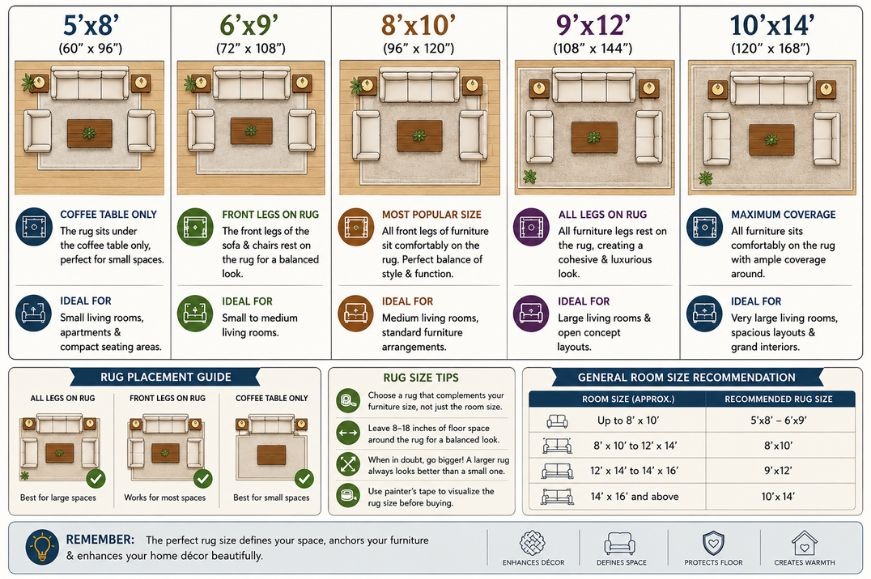
Choosing the right tribal rug size depends on your room dimensions, furniture layout, and how you want to define the space. As a general rule, leave 18–24 inches of bare floor around the rug’s edges in living rooms, use a 5×8 ft rug beside a queen bed, and opt for runners in hallways. Measure first, then shop.
Tribal rugs do something most décor items can’t—they tell a story while tying a room together. The bold geometric patterns and earthy tones carry decades of craft tradition, making them a go-to choice for homeowners who want character and warmth underfoot.
But here’s the problem most people run into: they fall in love with a rug’s pattern and forget to think about size. A rug that’s too small looks like a postage stamp. One that’s too large overwhelms the room. Getting the size right is just as important as getting the design right.
This guide walks you through how to size tribal rugs for every major space in your home—living room, bedroom, hallway, and dining area—so you can shop with confidence, whether you’re visiting a store or choosing to buy carpets online India.
Understanding Tribal Rug Dimensions
What are the standard rug sizes available?
Most tribal rugs come in these standard sizes:
-
2×3 ft – Ideal for entryways or small accent areas
-
4×6 ft – Works well beside beds or in compact spaces
-
5×8 ft – A versatile mid-size option for bedrooms and smaller living rooms
-
6×9 ft – Great for medium living rooms and dining areas
-
8×10 ft – The most popular size for standard living rooms
-
9×12 ft – Suits large living rooms and open-plan spaces
-
Runner (2×8 or 3×10 ft) – Designed for hallways and narrow passages
How do tribal rugs differ in sizing from other rug types?
Tribal rugs are traditionally handcrafted, which means slight size variations are normal—and expected. Unlike machine-made rugs with perfectly uniform dimensions, handcrafted rugs in Delhi and across India may vary by a few inches due to the hand-knotting process. This is not a flaw. It’s a mark of authenticity.
When shopping for tribal rugs, always check the exact measurements listed rather than relying on the size category alone.
How to Size Tribal Rugs for Living Rooms
The living room is where size mistakes are most visible—and most costly.
Which tribal rug size works best for a living room?
For a standard living room, an 8×10 ft or 9×12 ft tribal rug works best. The goal is to anchor the seating area without leaving awkward gaps between the rug and the walls.
Follow these placement rules:
-
All legs on the rug: Works best in larger rooms with big rugs. Creates a cohesive, pulled-together look.
-
Front legs only on the rug: The most common approach. The rug unifies the seating group without needing to cover the full furniture footprint.
-
No legs on the rug: Only works for very small accent rugs used as a focal point, not a functional anchor.
How should you measure your living room before buying a tribal rug?
-
Measure the full room length and width.
-
Mark out your furniture placement on the floor using tape.
-
Determine which placement style you want (all legs, front legs, or no legs).
-
Subtract accordingly to find your ideal rug dimensions.
-
Leave at least 18 inches of bare floor between the rug edge and the wall.
When you buy carpets online India, most reputable platforms—including The Ambiente—provide detailed size guides. Use them. A few minutes of measuring prevents a costly return.
Tribal Rugs for Bedrooms
What size tribal rug should you use in a bedroom?
The bedroom is more forgiving than the living room, but placement still matters.
-
Under the bed (large rug): Use an 8×10 ft or 9×12 ft rug and slide it under the bed so roughly two-thirds sits exposed on either side and at the foot.
-
Beside the bed (small rug): A 4×6 ft tribal rug placed on one or both sides of the bed works well in smaller rooms. It gives your feet a soft landing every morning.
-
Foot of the bed: A 2×3 ft or 3×5 ft rug placed horizontally at the foot of the bed adds a decorative touch without taking up much space.
How do handcrafted rugs in Delhi fit into bedroom design?
Handcrafted rugs in Delhi, like those from The Ambiente’s collection, bring hand-knotted texture and natural materials—wool and silk—into bedroom spaces. These materials regulate temperature, feel soft underfoot, and hold up well even in rooms with moderate foot traffic. A tribal rug beside the bed not only adds warmth but also absorbs sound, making the room feel quieter and more comfortable.
Sizing Tribal Rugs for Entryways and Hallways
Entryways and hallways are high-traffic zones. They’re also the first thing people see when they walk into your home.
What type of tribal rug works best in a hallway?
Runners are the standard choice. A 2×8 ft or 3×10 ft tribal runner fits most hallways without crowding the space. Leave 3–4 inches of bare floor on each side of the runner so the edges don’t curl or trip anyone.
For entryways, a 2×3 ft or 3×5 ft tribal rug works well in front of the door. Choose a rug with a tighter weave and durable wool pile—tribal rugs made with hand-knotted wool hold up better in high-traffic areas than flatweaves.
Avoid light-colored tribal rugs in entryways unless you’re prepared to clean them frequently.
Dining Rooms and Accent Spaces
How do you size a tribal rug under a dining table?
The key rule: the rug must be large enough that chairs remain on it even when pulled out from the table.
-
For a 4-seater table, use at least a 6×9 ft rug.
-
For a 6-seater table, go with an 8×10 ft rug.
-
For an 8-seater table, a 9×12 ft rug is the minimum.
Pull out your chairs fully before buying. The chair legs should stay on the rug when seated.
How can tribal rugs define zones in open-plan spaces?
In open-plan living and dining areas, tribal rugs act as visual dividers. Place a large rug (8×10 ft or 9×12 ft) under the seating group and a separate medium-sized rug (6×9 ft) under the dining table. The distinct rug zones signal separate functional areas without building physical barriers.
Common Rug Sizing Mistakes to Avoid
These are the errors that show up most often—and they’re all preventable.
-
Buying too small: A rug that only fits under the coffee table makes the room feel disconnected. Go larger than you think you need.
-
Not accounting for furniture placement: Always finalize where your furniture will sit before choosing a rug size.
-
Ignoring traffic flow: A rug that blocks a doorway or forces people to walk around it creates friction in daily life. Mark out the rug area with tape before committing.
-
Forgetting rug pads: A rug pad adds grip, extends the rug’s life, and adds cushioning. Factor in the pad dimensions when measuring—they should be 1–2 inches smaller than the rug on all sides.
How to Care for Your Tribal Rug Based on Size and Placement
What maintenance does a tribal rug need?
The larger the rug and the higher the traffic, the more attention it needs.
-
Vacuum regularly: For wool tribal rugs, vacuum once or twice a week in high-traffic areas. Avoid using the beater bar attachment, which can pull out fibers.
-
Rotate every 6–12 months: This distributes foot traffic evenly and prevents uneven fading.
-
Spot clean immediately: Blot spills with a clean cloth. Don’t rub. Use a mild detergent and cold water for most stains.
-
Deep clean annually: Take the rug to a professional cleaner experienced with handcrafted rugs. Machine washing damages the fibers and the knots.
-
Use rug pads: They prevent slipping, reduce fiber stress, and protect your floors.
Handcrafted rugs in Delhi, like those from The Ambiente, are made with natural wool and silk. These materials are resilient but respond best to gentle care.
Pick the Right Size, Then Pick the Right Rug
Getting the size right is the foundation of every good rug decision. Once you have your measurements, everything else—pattern, color, material—becomes much easier to navigate.
Here’s a simple recap before you shop:
-
Living rooms: 8×10 ft or 9×12 ft; front or all legs on the rug
-
Bedrooms: 5×8 ft beside the bed or 8×10 ft under the bed
-
Hallways: Runners in 2×8 ft or 3×10 ft
-
Dining rooms: Add 24 inches on all sides of the table
The Ambiente offers a curated range of tribal rugs handcrafted in Bhadohi—India’s largest hub of hand-knotted carpet weaving—with a flagship store in Delhi and the option to buy carpets online India through their website. Their team has 30+ years of manufacturing experience and has served over 5,000 clients across India and abroad.
Measure your space, use the guidelines above, and shop knowing exactly what you need.
Frequently Asked Questions
What size tribal rug should I buy for a small living room?
For a small living room (under 12×12 ft), a 5×8 ft or 6×9 ft tribal rug works well. Place the front legs of your sofa and chairs on the rug to make the space feel larger and more connected.
Can I use a tribal rug in a bedroom?
Yes. A 4×6 ft tribal rug beside the bed or an 8×10 ft rug placed under the bed are both practical options. Wool tribal rugs work particularly well in bedrooms because they are soft underfoot and naturally temperature-regulating.
How do I buy carpets online India without getting the size wrong?
Always measure your room and mark your furniture layout with tape before ordering. Check the exact listed dimensions on the product page—not just the size category—and review the retailer’s return policy before purchasing.
Are handcrafted rugs in Delhi available in custom sizes?
Yes. Many rug brands, including The Ambiente, offer custom sizing for handcrafted rugs. Custom orders typically take longer to produce but allow you to get the exact dimensions your space requires.
How much floor should show around a tribal rug?
In living rooms, aim for 18–24 inches of bare floor between the rug’s edge and the wall. In dining rooms, the rug should extend at least 24 inches beyond each side of the table.
What’s the minimum rug size for a dining room with a 6-seater table?
Use at least an 8×10 ft rug under a 6-seater dining table. This ensures the chair legs remain on the rug even when pulled out.