


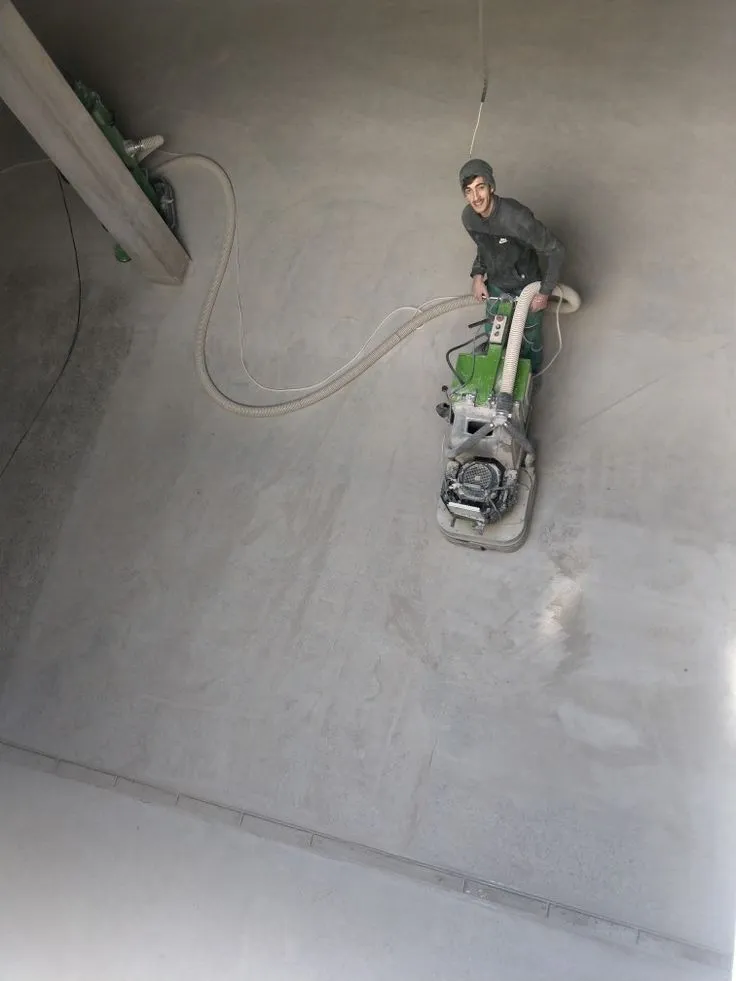
Promising a customer that a resin floor will be ready by Friday is easy; coordinating the steps that make that promise realistic takes more work. Concrete preparation, coating application, recoat windows and return-to-service restrictions must fit together. A concrete grinding production calculator can estimate machine time from floor area, hourly production rate, passes, and the number of grinders. But it cannot anticipate every doorway, stubborn coating, or unexpected repair. Flooring contractors need to combine calculations with site observations before committing crews, materials and reopening dates.
Begin With the Actual Work Area
Measure each floor section and note obstacles that may slow a machine. Narrow corridors, pillars, and equipment bases require more edge work than a large open slab of equal area. Those details influence the number of hours available for coating later.
Record whether existing paint, adhesive, or thick coatings must be removed. A single preparation pass may be insufficient for heavily contaminated floors, and the required surface profile should follow the coating manufacturer’s instructions.
Estimate Grinding With Realistic Speeds
Grinding production varies with concrete hardness, machine weight, diamond tooling, and the work required. A published hourly rate can be a starting point, but it should not replace a test area and the crew’s actual production records.
The calculator allows users to adjust production speed, number of passes, and simultaneous machines. Adding another grinder may shorten open-area grinding time, but it can also introduce labor, power, and access considerations. Scheduling should account for those constraints rather than simply dividing every task in half.
Separate Machine Time From Total Prep
Open-floor grinding is only part of surface preparation. Moving equipment, protecting adjoining rooms, edge grinding, vacuuming, testing moisture, and repairing cracks can occupy substantial time.
List these tasks separately when building a quote. Otherwise, an accurate machine calculation may still produce an unrealistic completion date. Unexpected slab defects should be recorded and discussed before they become a rushed after-hours repair.
Build the Cure Timeline Carefully
A polyaspartic cure time calculator can help explore how jobsite temperature and product speed might affect pot life, recoat timing, and return to traffic. It is a planning estimate, not a substitute for the actual manufacturer’s technical data sheet.
Different products have different mixing, application, and curing rules. Air temperature and concrete temperature may also differ. A floor that feels dry should not be assumed ready for furniture, forklifts, or vehicles without checking the specified load restrictions.
Agree on Critical Milestones
Before announcing a completion date, review the major dependencies with the crew:
-
Clearing the floor and protecting adjacent areas.
-
Mechanical preparation and edge work.
-
Moisture checks and crack repairs, where needed.
-
Primer or base-coat application.
-
Recoat windows and decorative broadcasts.
-
Foot-traffic and heavy-load reopening times.
Assign responsibility for checking each milestone. A schedule is more useful when it explains why work cannot advance than when it simply lists optimistic finish times.
Pay Attention to Temperature Changes
A product’s published cure time is usually tied to specified test conditions. Cooler or warmer surfaces can change working times, and humidity may introduce separate application concerns. Contractors should compare current measurements with the product’s allowed ranges.
If site conditions fall outside those limits, the correct response may be to delay installation or use an approved alternative procedure. Changing mix ratios to force faster curing is not a safe scheduling shortcut.
Coordinate Customer Access
A retail tenant may need a temporary entrance, while a warehouse might need a staged traffic plan. Customers should know whether a promised reopening means light walking, furniture replacement, or heavy equipment use. These are not identical milestones.
Put access restrictions and contingencies in writing. When a delay occurs, communicate the cause promptly rather than presenting a rushed installation as the only option. Clear planning protects both the customer relationship and the finished floor.
Learn From Completed Jobs
After each project, compare estimated grinding hours, actual labor, interruptions, and curing delays. A small set of reliable job records can improve future production rates for different machines and slab conditions.
Save the coating specifications as well. That information helps contractors make better estimates, provide accurate care instructions, and assess later repairs without reconstructing the original installation from memory.
Conclusion
A dependable floor installation schedule is built from measured preparation work, realistic crew capacity, and product-specific curing limits. Estimating tools can organize those inputs, but they cannot replace a site inspection, technical documentation, or safe operating decisions. Flooring contractors can use tradeepoxy.com to explore grinding production and polyaspartic timing scenarios before confirming a project timetable. Combining calculation with actual job records helps reduce unexpected closures, improves communication, and gives each coating system the conditions it needs for proper installation.